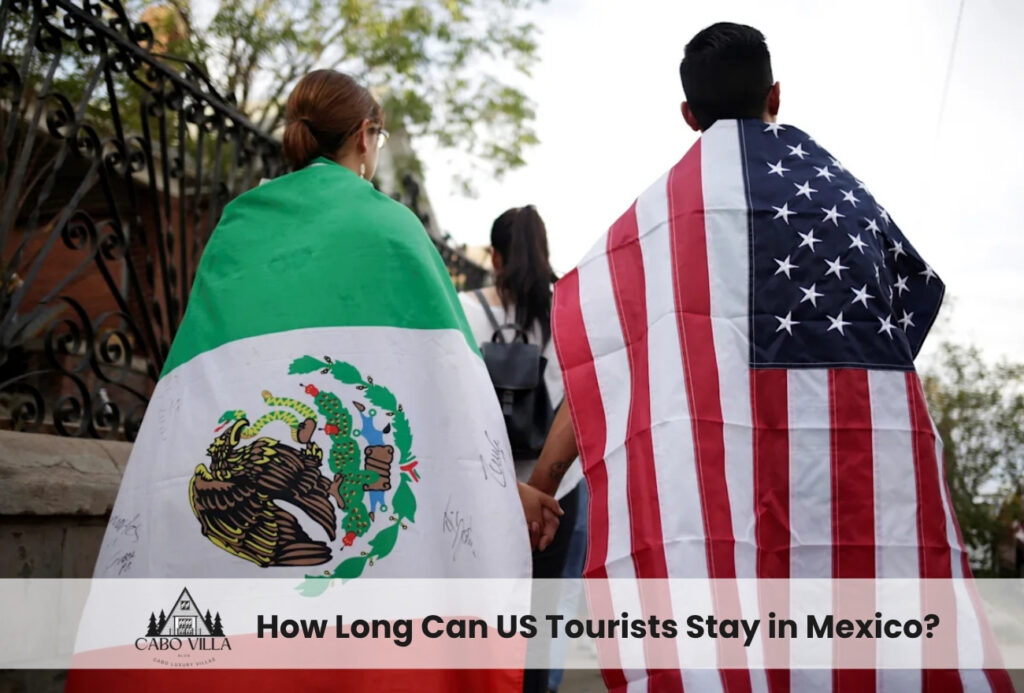
Planning a trip to Mexico is exciting. Whether you are heading to the sun-drenched shores of Los Cabos, the colonial streets of San Miguel de Allende, or the cenotes of the Yucatán Peninsula, one of the first things every American traveler needs to know is how long they are actually allowed to stay.
The answer is straightforward once you understand how Mexico’s entry system works. But there are details that catch many first-time visitors off guard, especially around the visitor permit, how days are counted, and what really happens if you go over your allowed time.
This guide walks you through everything clearly, so you can plan your trip with confidence.
The 180-Day Rule Explained
Most US tourists are granted permission to stay in Mexico for up to 180 days without a visa. The actual length granted is determined by the immigration officer at your point of entry. Anywhere
That is roughly six months, which is generous compared to many other countries. For the majority of American visitors coming to places like Cabo San Lucas for a week or two, this limit is never something they will come close to reaching.
However, 180 days is the ceiling, not a guaranteed right. Immigration officers have discretion over the specific duration they authorize. The standard practice is to grant the full 180 days, but officers may ask about your travel plans and intended length of stay. Anywhere
If you are planning a longer stay, having your accommodation details and a return flight itinerary ready at the immigration desk is a smart move.
What Is the FMM Tourist Card?
Many American travelers hear the term “FMM” and assume it is a visa. It is not.
The tourist card required by visitors from the US is called the Forma Migratoria Múltiple (FMM). The FMM is not a visa. It is an entry requirement for all foreign visitors, including Americans. It is mandatory if you plan to travel more than 20 kilometers into Mexican territory and stay more than 72 hours. Tourist Card MX
A Mexican tourist card for United States citizens is a single-entry document. It becomes invalid once you leave Mexico. You need to get a new FMM for every trip to the country. Tourist Card MX
As of October 2022, several ports of entry began using a stamp instead of the FMM paper form, including Mexico City, Guadalajara, Puerto Vallarta, La Paz, Cancun, Loreto, Los Cabos, and Huatulco. With the passport stamp, the immigration agent writes the number of days allowed for your stay directly on the stamp. Mexico Living
So if you arrive in Los Cabos and receive a passport stamp showing 180 days, that is your authorized length of stay for that trip. Count it carefully from your arrival date. If you are visiting Cabo San Lucas as part of a longer Baja California road trip or planning to stay in a private villa for several weeks, this stamp date matters.
How to Count Your Allowed Days Correctly
This is where many travelers make mistakes.
When you pass through immigration, the official who checks your passport and FMM form will write the number of days you can stay on the visitor’s permit. It is up to you to calculate the correct exit date so you do not accidentally overstay. For example, if you enter Mexico on January 1 and are granted 180 days, you must exit Mexico by June 30. It is important to remember that 180 days is not exactly 6 months because some months are longer than others. Where The Road Forks
Use a calendar, not a rough estimate. Mark your authorized exit date the moment you land. If you are spending two weeks at a luxury villa in Cabo for a special occasion, this is easy. But if you are doing a longer self-drive trip through Baja, keeping track of your authorized days is essential.
Can You Receive Fewer Than 180 Days?
Yes. This surprises many travelers.
There are several cases where Mexican officials may grant you fewer than 180 days. For example, when entering Mexico on a cruise ship you often only get 21 days. When transiting through Mexico, you may only get 30 days. If you indicate on the FMM application that you only plan to stay for 2 weeks, the immigration official might only grant you two weeks. Where The Road Forks
This matters in practice. If you tell the immigration officer you are only staying for ten days, do not be surprised if your stamp reflects exactly that. Always declare the full length of your intended stay when asked, and never indicate a shorter trip than you actually plan.
For travelers flying into San José del Cabo or arriving by private charter, the full 180 days is typically granted without issue.
What Documents Do You Need at Entry?
US citizens must have a few essential documents to travel to Mexico for tourism. These include a valid passport. Your US passport must not expire for at least 6 months after the date of arrival. If your passport is due to expire sooner than this, renew it before traveling to Mexico. Tourist Card MX
Beyond your passport, you may also be asked about:
Your accommodation details, specifically where you are staying for the first few nights. If you are renting a luxury villa in Cabo San Lucas, having the property address or confirmation email on your phone is useful.
A return flight or onward travel ticket. This is not always checked, but having it ready demonstrates that you have concrete plans to leave within your allowed period.
Proof that you can financially support yourself during your stay. This rarely comes up for tourists but can be requested.
If you are visiting Quintana Roo, the state that includes Cancun and Playa del Carmen, note that a separate state tourism tax called Visitax applies. This does not affect Los Cabos visitors, as Cabo falls within Baja California Sur.
Can You Extend Your Stay Beyond 180 Days?
The visitor permit cannot be extended or renewed, and you must leave Mexico by the date it expires. If you overstay your visitor permit, you will need to pay a fine when you leave the country. Mexperience
You must leave by the expiry date, but there is no time limit on how long you must remain outside of Mexico before you can return using a new visitor permit. Mexperience
So if you want to spend more time in Mexico, one legal option is to leave the country, even briefly, and re-enter on a new FMM. Many long-stay visitors do exactly this. However, Mexican immigration officials are aware of this pattern and have become more selective about granting the full 180 days to people who appear to be living in Mexico as a de facto resident on a rolling tourist permit.
If you plan to stay in Mexico for more than 180 days in a year, the right path is to apply for residency rather than cycling tourist entries.
What Happens If You Overstay?
Overstaying your authorized days in Mexico is not treated as a criminal matter for tourists, but it does come with consequences.
You will be fined for overstaying. The fine depends on how long you overstayed. Mexico charges on a per-day basis. The maximum fine is around $350 USD (7,000 pesos). Mexico generally will not bar you from re-entering if you overstay. You can pay the fine at an immigration office or at an international airport. If you are flying out of Mexico, you should take care of this fine a couple of days before your flight so you do not risk missing it. Where The Road Forks
There is also a risk of deportation. While rare for tourists, overstaying could result in deportation and potential difficulties when attempting to re-enter Mexico in the future. MEXLAW
The practical advice is simple: keep track of your authorized days. If you are staying in Cabo for an extended period at a private villa rental, put the exit date in your phone calendar as a reminder well before the actual deadline.
Staying Longer: Temporary and Permanent Residency
If you fall in love with Mexico and want to stay beyond what the tourist permit allows, residency is the legitimate route.
Temporary residency enables foreigners to remain in Mexico beyond the maximum 180-day time limit imposed with the visitor permit and also gives them access to certain residency privileges, such as opening a bank account. When you are granted Residente Temporal, it is valid from one year to four years. Mexperience
In 2025, most applicants for temporary residency must show monthly income of approximately $4,185 USD or savings of $69,750 USD for 12 months. Requirements vary by consulate, situation, and method. Dnexpress
With permanent residency, you can live in Mexico without time limits. Temporary residency is typically granted for one year initially and can be renewed up to four years before you must either leave the country or transition to permanent residency. Lexidy
For Americans who have discovered that Cabo San Lucas offers a world-class lifestyle, the residency path is worth exploring if your stays are becoming longer and more frequent. Many US retirees and remote workers have made this shift in recent years.
Practical Tips Before You Travel to Cabo
Knowing the rules is one thing. Applying them smoothly on arrival is another. Here is what experienced travelers do to make the entry process stress-free.
Carry a printed or digital copy of your accommodation details.
If you are staying at one of the beachfront villas along the Tourist Corridor, having the property name and address ready shows the immigration officer you have a concrete plan.
Be honest about your length of stay.
If you plan to stay 30 days, say 30 days. If you plan to use the full 180, say so. Do not understate your trip to seem like a casual visitor.
Photograph your passport stamp or keep your FMM paper form safe.
You will need to surrender your FMM when you leave Mexico. Losing it can cause delays at the airport.
Note your authorized days in your phone immediately after landing.
Set a reminder two weeks before your exit deadline so you have time to make arrangements without rushing.
Do not alter the FMM form or passport stamp.
The form has a unique serial number printed on it that correlates to an electronic record of your entry to Mexico. The number of days you are granted is stored on that record, and the INM will not take kindly to anyone tampering with the form. Mexperience
Planning Your Cabo Trip Around Your Authorized Stay
Most American travelers visiting Cabo San Lucas stay between four days and two weeks. The 180-day limit is essentially irrelevant for a standard vacation. Where it becomes important is for:
Snowbirds who want to spend November through April in Baja California.
Remote workers who want to base themselves in Mexico for several months.
Families who split their time between a US home and a Mexican vacation property.
Retired couples who want to test living in Mexico before committing to residency.
For all of these groups, understanding the 180-day rule and the options beyond it is genuinely important. The best time to visit Cabo San Lucas for most Americans is between November and April, which falls comfortably within a single 180-day tourist entry.
If you are planning a trip that includes beach time, checking out the best swimmable beaches in Cabo or exploring family-friendly activities, knowing your authorized days in advance means you can plan every detail without worrying about immigration compliance.
Travelers heading to Cabo for the first time often wonder about money and logistics. The Cabo currency guide covers how USD and pesos work at local businesses, which is useful for budgeting a longer stay. And if your trip involves riding out to explore the desert or coastline, horseback riding tours in Cabo San Lucas are a popular way to experience the landscape beyond the resort zone.
Final Thoughts
US citizens do not need a visa to visit Mexico for tourism.
The maximum stay on a tourist entry is 180 days, though the immigration officer at your port of entry determines the exact number and writes it on your passport stamp or FMM form.
The FMM tourist card is not a visa. It is a separate entry document, and you need a new one for each trip.
You cannot extend the FMM. To stay beyond your authorized period, you must leave Mexico and re-enter, or apply for residency.
Overstaying results in a fine calculated per day, capped at approximately $350 USD.
For stays longer than 180 days in a rolling period, temporary residency is the legal and practical solution.
Planning your trip with these facts in mind means you can focus entirely on enjoying what Cabo and Mexico have to offer, whether that is a long weekend at a private beachfront villa, an extended stay exploring the full length of Baja California, or a multi-month winter escape from colder climates up north.